Why strategic patience beats over-expansion, his most expensive mistakes, and the decision to take the company public
You’ve eaten his family’s duck rice but You probably didn’t know it’s now a listed company.
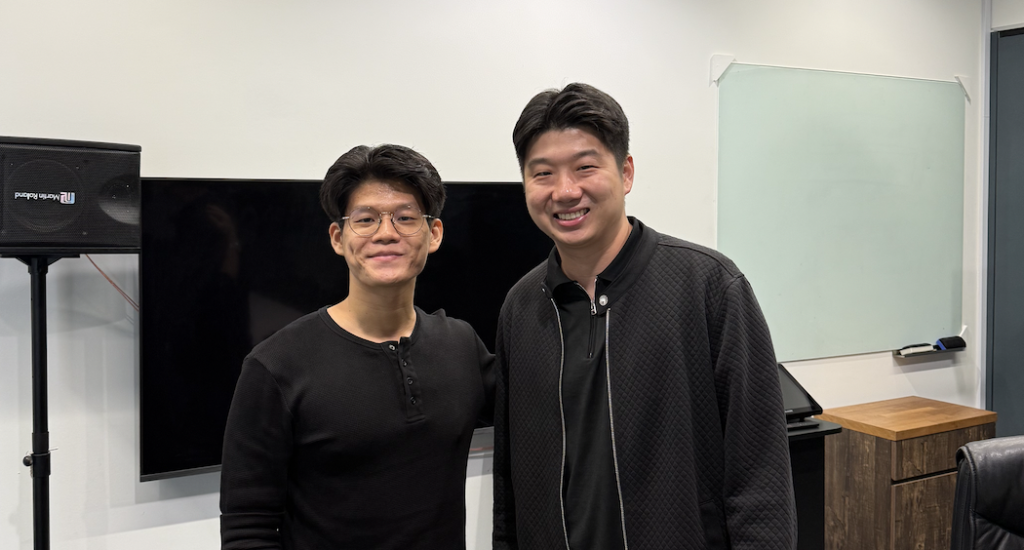
If you grew up in Singapore, there’s a good chance Yew Kee is somewhere in your memory, a plate of glistening braised duck over rice, the kind of meal that tastes like a specific decade of your childhood. What you might not know is that the hawker stall Qin Quan’s grandfather started has grown into YKGI (SGX: YK9.SI), a publicly listed F&B group.
I sat down with Qin Quan, the third-generation owner, who walked me through the boring, hard work behind building something that lasts.
Three things he said have been rattling around my head since.
Enjoying this story?
Get raw interviews and unfiltered lessons from entrepreneurs across Asia — straight to your inbox 👇
1. Don’t treat a new shop like a cash machine. Treat it like a baby.
Everyone in Singapore knows F&B is brutal and unforgiving — and yet shops keep opening. Qin Quan’s take is that people still treat it like a cash business at heart, and that’s why many F&B businesses are quietly shutting down right now.
“People always thought it’s a cash business, where cash keeps coming in. But you really need to treat it like a baby — to nurture it and take care of it until it’s mature. Then it churns money for you. It’s not about opening.”
Look at how he ran Pasta Go, one of the group’s newer brands. They didn’t blitz the island with outlets. They spent the first two years doing the deeply unsexy work — managing cost, locking down quality, finding the formula — before they let themselves expand at all. Only once the thing could stand on its own did they start opening more.
It’s easy to be impressed by how many outlets a brand has. But are they making money — or just staying open?
The takeaway, at least for me, it is not really about the number of stores. It’s that unsustainable growth isn’t growth — it’s borrowed risk coming due.
2. His most expensive lessons are brands you’ve never heard of.
Before the concepts that worked — Pasta Go, Chicha sanchen— there were the ones that didn’t.
Qin Quan experimented his way into a lot of ideas over the years, and plenty of them failed. But it was those misses that sharpened his sense of what actually works and what doesn’t. People see YKGI today — a group with 90+ stores — and assume it was a straight line. They don’t see the mistakes that taught the group how to get there.
“We’ve made a lot of bad decisions — it’s just that you don’t see them. We opened a few Japanese restaurants and other brands, and we lost a lot, because the execution and planning weren’t done right.”
He’s refreshingly honest about why they failed. Early on, he opened concepts based on what they personally liked rather than what the market wanted — or what they were actually good at.
“You can’t open a Japanese restaurant just because you like Japanese food. That was our thinking back then.”
The lesson he pulled out of all those misfires is one of the most underrated ideas in business: know your DNA. YKGI, he realised, is a quick-service company at its core. Their people, their systems, their instincts — all built for fast, casual, high-volume service. A full-fledged sit-down restaurant wasn’t a stretch goal; it was a category error.
“After so many failed projects, we realised quick service is what we specialise in.”
So now, every brand they run is quick service. Not because it’s the most exciting path, but because it’s the one they know they can win at — and the failures are what taught them where that line is.
It’s a simple idea that’s weirdly hard to follow — do what you’re good at, not what is exciting. Qin Quan learned it the expensive way.
Enjoying this? Get the next founder’s story straight to your inbox. 👇
3. He took the family business public — to take away his own safety net.
Ask most people why a company goes public and they’ll say one word: money. Raise capital, fund growth, cash out. Qin Quan’s reason is stranger, and more interesting.
A family-owned duck rice business could have stayed private forever. It would have been comfortable — and that was exactly the problem.
“If you’re family-owned, it’s very comfortable; you don’t have to worry too much. My parents are semi-retired now, so why would they worry so much?”
With no outside pressure and his parents easing into retirement, the real risk wasn’t failure. It was complacency — a comfortable business slowly losing its edge. So listing YKGI was, in part, a way to force the family to stay on their toes.
“After you list, everything is different. You have the market to answer to, so many things to account for, and it makes you more alert and keeps you on your toes — you really have to drive growth.”
He’s clear-eyed that this isn’t free. Being listed means answering to shareholders every single day, and he’s adamant it can’t become a game of chasing outlet counts to please them. For an everyday business like food, he says, the focus has to stay on quality and how you run things — not just opening more outlets to look impressive. But he’s convinced the pressure is worth it: “our whole mentality will change — we’ll be more grounded, more focused.”
There’s something almost backwards about that, and that’s what makes it interesting. Most people chase comfort. Qin Quan’s family walked toward pressure on purpose, because they could see what comfort does to a business that’s been around long enough to feel safe — it makes it soft.
Like many things in life, comfort is the quiet killer of personal growth and businesses, and accountability keeps you sharp and humble.
What I took away
Be patient, stick to what you’re good at, and don’t get comfortable.
While none of those may seem like exciting advice, and the opposite of what you usually hear (no growth hack, no viral moment, no overnight scaling), in a world that rewards moving fast and looking impressive, he’s practicing strategic patience.
It’s easy to credit YKGI’s success to his father and grandfather. But it was Qin Quan’s own willingness to experiment, take risks, and own his mistakes that grew a single duck rice stall into a multi-brand portfolio of 90+ stores.
If you got something out of this, the best thing you can do is share it with one founder or operator who’d appreciate it — that’s how this grows. And if you want another founder story to chew on, here’s Zenyum.
Bosses Go Crazy is where I share the real, unfiltered stories from the founders building across Asia. Subscribe to get the next conversation in your inbox.
P.S. Prefer to watch instead of read? Head over to our Instagram / TikTok.