He built one of Asia’s largest dental-care tech companies, sharing the lessons he learnt from scaling Zenyum, and his single, most expensive mistake that nearly cost everything.
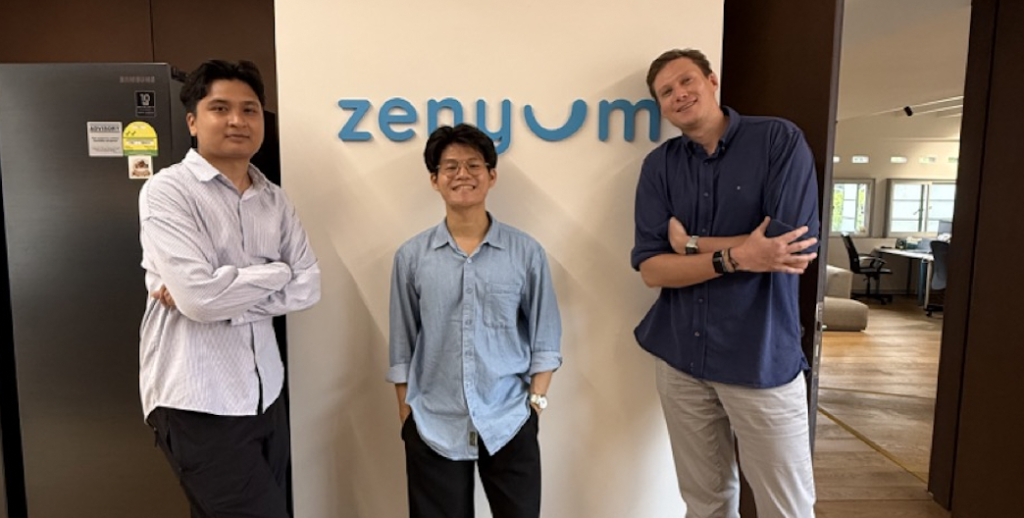
I recently sat down with Julian Artopé, the founder and CEO of Zenyum.
If you don’t know the company: Zenyum makes invisible teeth aligners — the clear, removable alternative to traditional braces — and has grown into one of the largest dental-care tech businesses in Asia, operating across nine countries. Julian started it in 2018 after a dinner with an orthodontist friend who, half-complaining, explained how 3D printing and new design tech were about to upend his entire profession. Julian heard a problem worth building around. The rest became Zenyum.
But this isn’t a story about aligners. Our conversation were three ideas that apply to anyone trying to build something, regardless of the industry you are in.
Enjoying this story?
Get raw interviews and unfiltered lessons from entrepreneurs across Asia — straight to your inbox 👇
1. The worst reason to start a business is to get rich
This is the one I keep coming back to:
“Sometimes I met founders that maybe started their business because they wanted to get rich quick, and I truly believe it’s one of the worst ideas if you want to make money to start a business because the likelihood is very slim, and if you already put that much time and energy into everything, then you better do something that you really enjoy.”
His logic is hard to argue with. Building a company will take more time and energy than almost anything else you do. The likelihood of striking it rich is low. So if money is the only thing pulling you forward, you’ll quit the moment things get hard — and they will get hard. What keeps you going through the brutal stretches isn’t the payday. It’s having a product and a team you genuinely love.
For Julian, that’s what made Zenyum sustainable: he cares about the actual outcome, which is to help people smile more, not just the business around it. The money, if it comes, is a byproduct of caring about the right thing first.
The takeaway isn’t “money doesn’t matter.” It’s that money is a terrible primary motivator, because it runs out exactly when you need fuel the most.
2. Know when to go fast — and when to slow down
Julian describes himself as an “80/20” person — move fast, ship, don’t over-polish. Speed is one of Zenyum’s core values, and it comes straight from him.
But here’s the part most people miss: he credits a lot of the company’s success to his co-founders being the opposite.
“I’m very 80/20 — speed is one of the values that we have at Zenyum, and that probably comes from my end. But if my co-founders wouldn’t have been extremely detail-oriented, and sometimes even would have said, ‘hey, let’s slow down, let’s make sure that whatever we’re putting out there in the world is meeting our quality standards,’ we would not have been as successful. So you need both.”
And the balance shifts depending on where the company is:
“There’s times where you need to go extremely fast. Before you hit the market, you need to make sure that your quality is there… but once you decide to go out to market, you need to be fast, you need to be aggressive, you need to be better in operations than anyone else around you. Likewise, once the company hits a certain size and growth stage, there’s also a point where you need to pause and say, okay, is my business model still working, and how do I right-size the business for the current stage?”
Before you launch, you slow down and obsess over the product. The moment you go to market, you move fast and aggressively, because competitors are already lined up. Then, once you reach scale, you pause again and ask the harder question: is this still working, and is the business the right size for the stage it’s actually in?
Speed isn’t a personality trait you either have or don’t. It’s a dial you learn to turn up and down — and ideally, you build a team that helps you turn it.
3. His most expensive mistake: Trying to win everywhere at once
This was the most candid moment of the conversation, and the most useful.
Around 2019–2020, when the only metric that seemed to matter was top-line growth, Zenyum expanded into a lot of markets at the same time. In hindsight, Julian says he wishes they’d carried the patience and product-market-fit discipline of the early days into that expansion, and gone market by market, instead of everywhere all at once.
The principle underneath it: your first market is your real product-market fit test. It tells you whether your product, your pricing, your design, your whole value proposition actually holds up, and whether you have a business at all. Rushing past that to plant flags in ten places doesn’t multiply your success. It multiplies your unsolved problems.
It’s also why Zenyum chose Singapore first: avid, educated consumers who give fast feedback, plus responsive regulators. Get the hard signal from one demanding market before you scale the playbook.
The lesson for the rest of us: growth for its own sake is a trap. Nail one thing completely before you try to nail ten.
The thread that ties them together
Looking back at the three, they’re really the same idea wearing different clothes: substance before speed, depth before scale. Build for a reason that lasts. Go fast, but know when not to. And earn the right to expand by getting one thing genuinely right first.
Julian put it best when describing the journey itself — that the highs make you feel on top of the world and the lows are genuinely brutal, and that it takes a little naivety to even begin. But if you’re building around something you actually care about, the rollercoaster is worth riding.
One last thing: live a life of euphoria
Early in our conversation, Julian said something that stuck with me more than any business lesson.
He talked about how, in startups, there are really only two emotions — terror or euphoria. And given the choice, he’ll take that volatility over the alternative every time.
“I still think it’s risky, but I also think it’s the most gratifying thing to do… There is nothing better, frankly, than to run your own company and do something that you truly love… I know people in corporate jobs who just see the years pass by. If you asked them right now what happened in 2021 versus 2022, they might not even be able to answer — and that’s something that’s truly scary to me.”
That last part is the one I can’t shake.
The real risk isn’t failing. It’s looking up one day and realizing the years have blurred together — that you can’t tell one from the next because nothing in them felt like yours. A life of euphoria doesn’t mean a life without fear. It’s about spending your time on something you’re passionate about and genuinely care about.
You don’t have to start a company to live that way. But you do have to choose something you care enough about to feel the highs and the lows of it.
That’s what this whole project is about — finding the people who chose that, and learning how they did it.
If you got something out of this, the best thing you can do is share it with one founder or operator who’d appreciate it — that’s how this grows.
Bosses Go Crazy is where I share the real, unfiltered stories from the founders building across Asia. Subscribe to get the next conversation in your inbox.
P.S. Prefer to watch instead of read? I shared a short version of this conversation in two parts — Part 1 (Instagram / TikTok) and Part 2 (Instagram / TikTok).